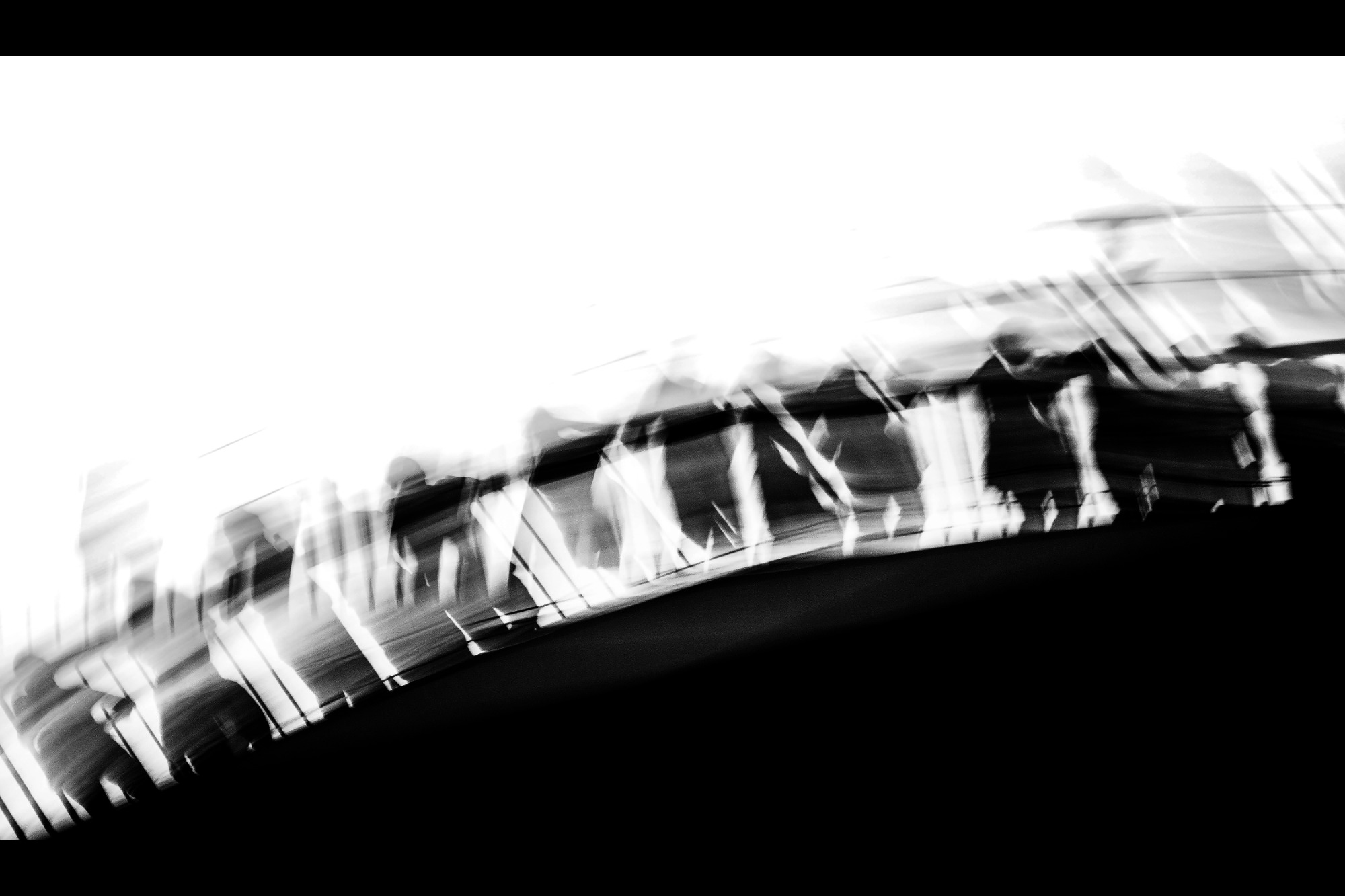
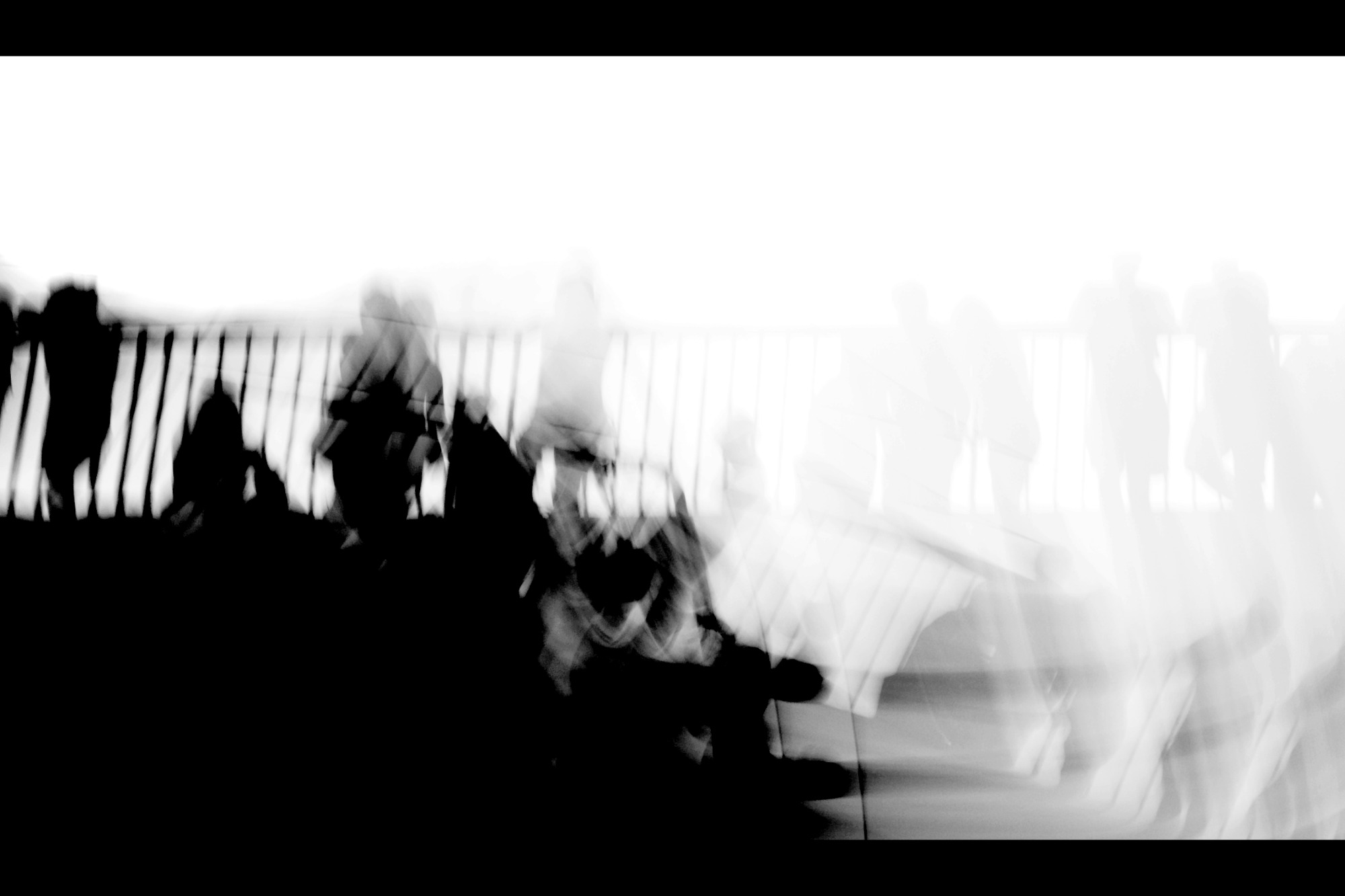
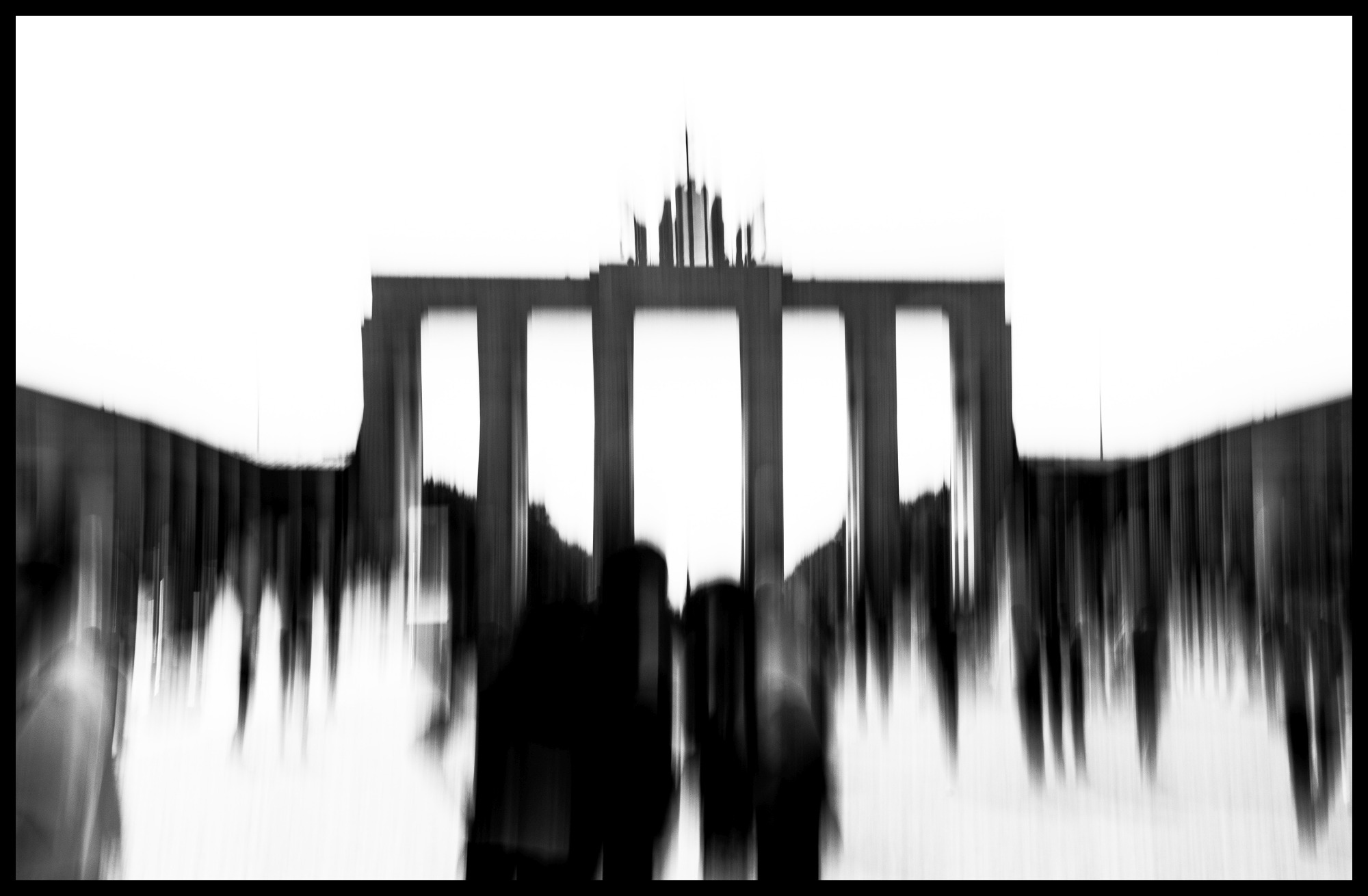
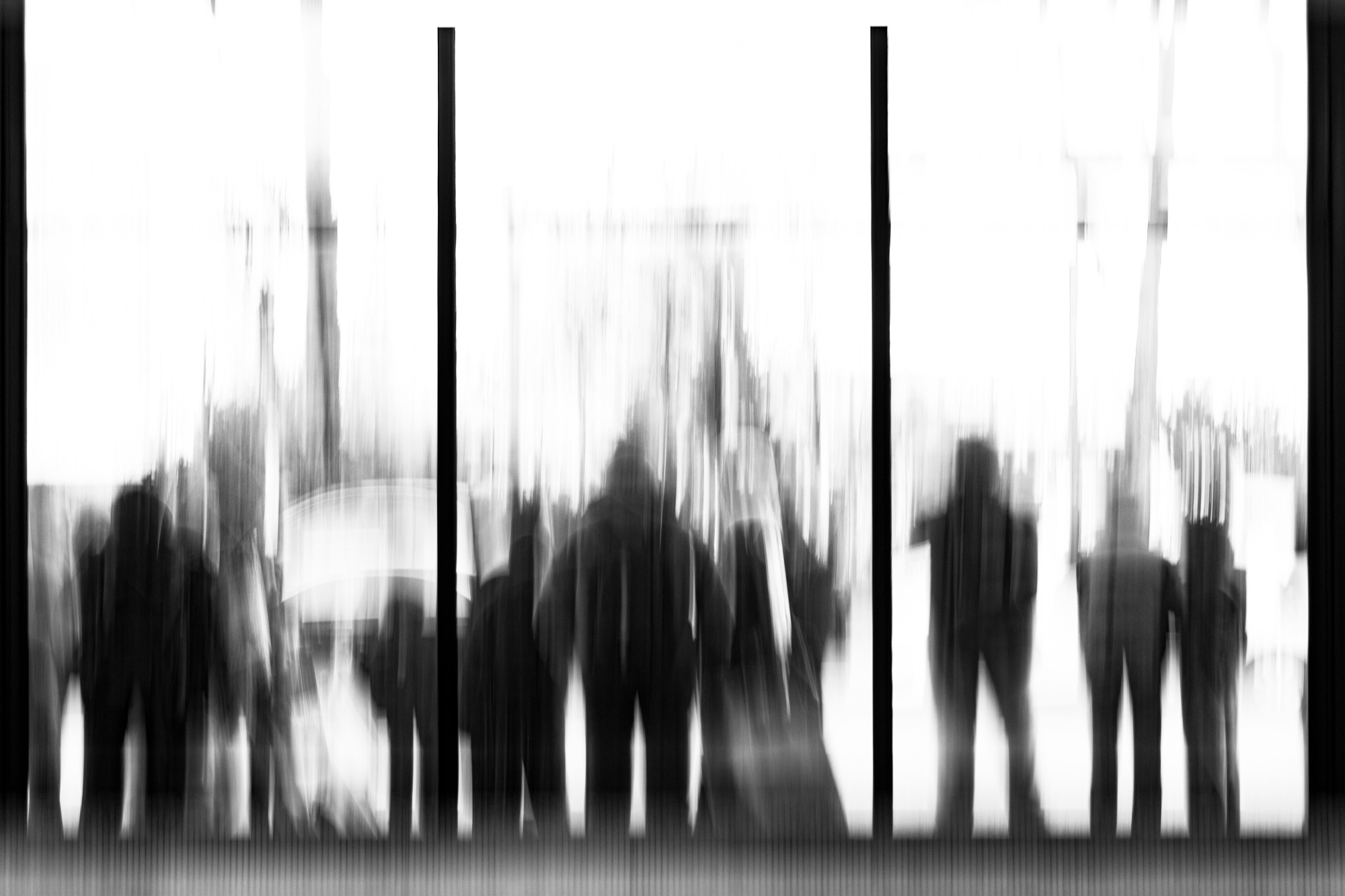
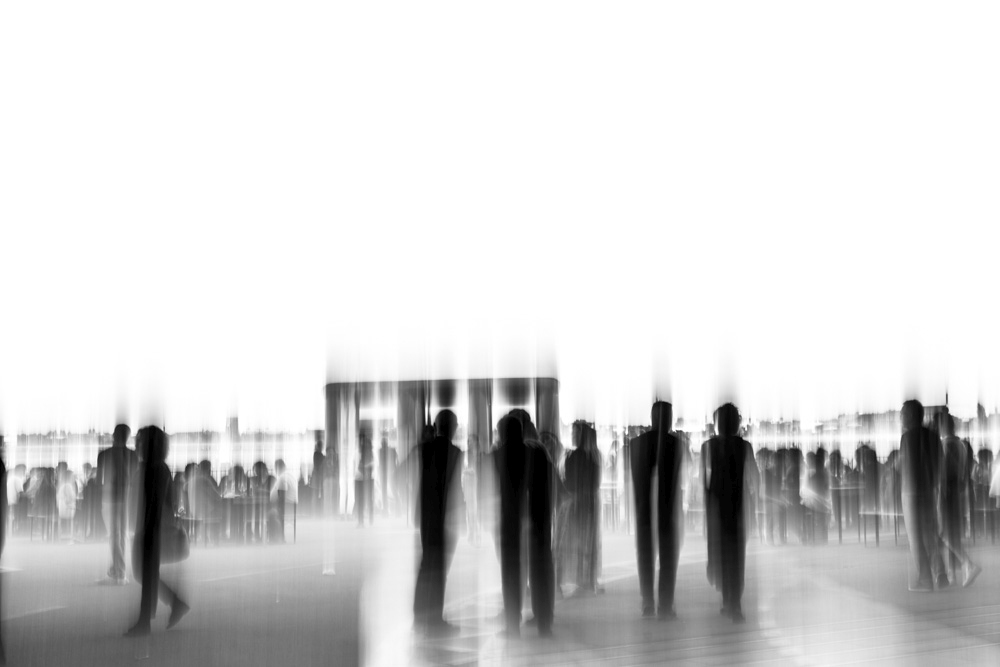
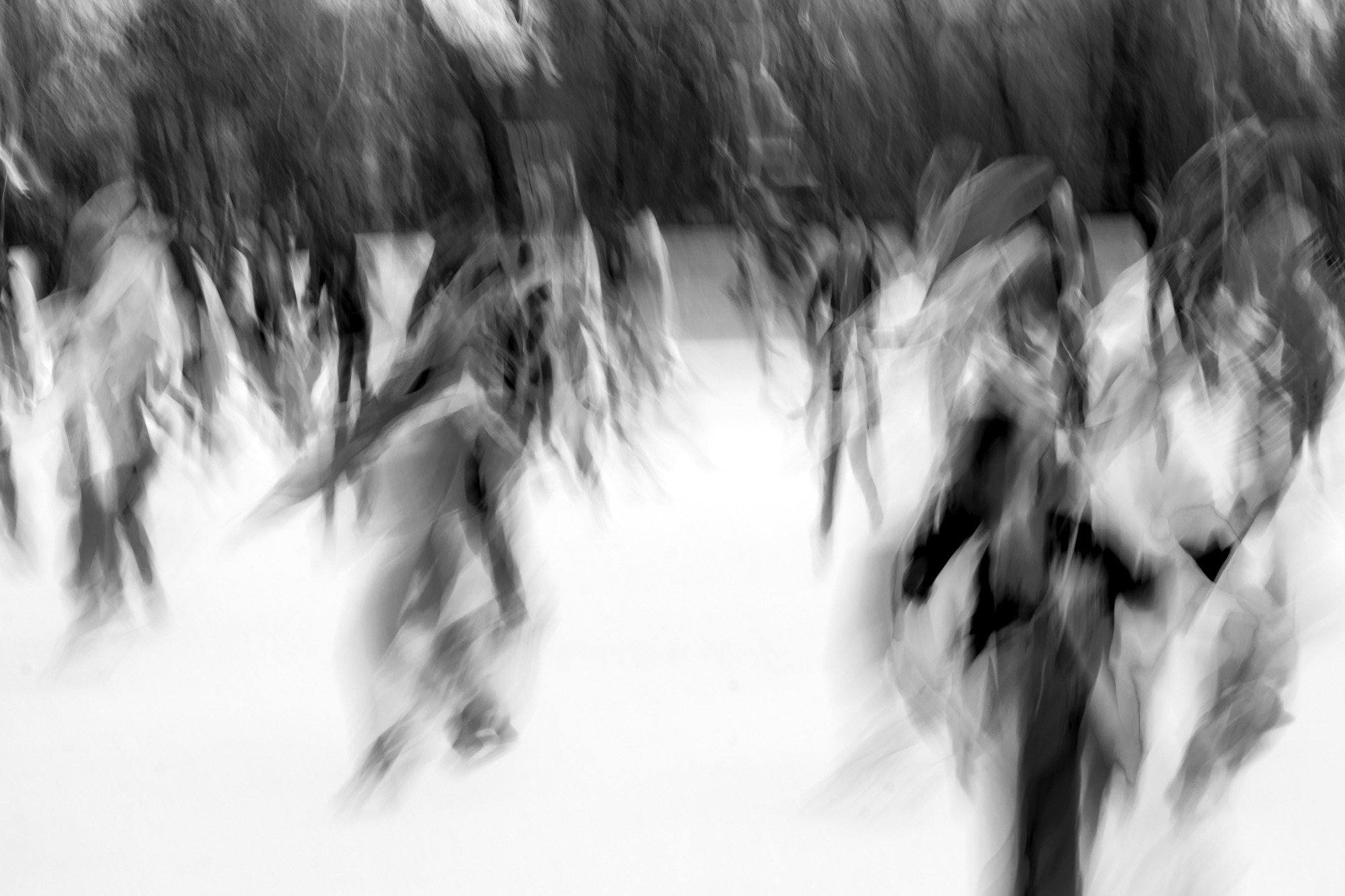
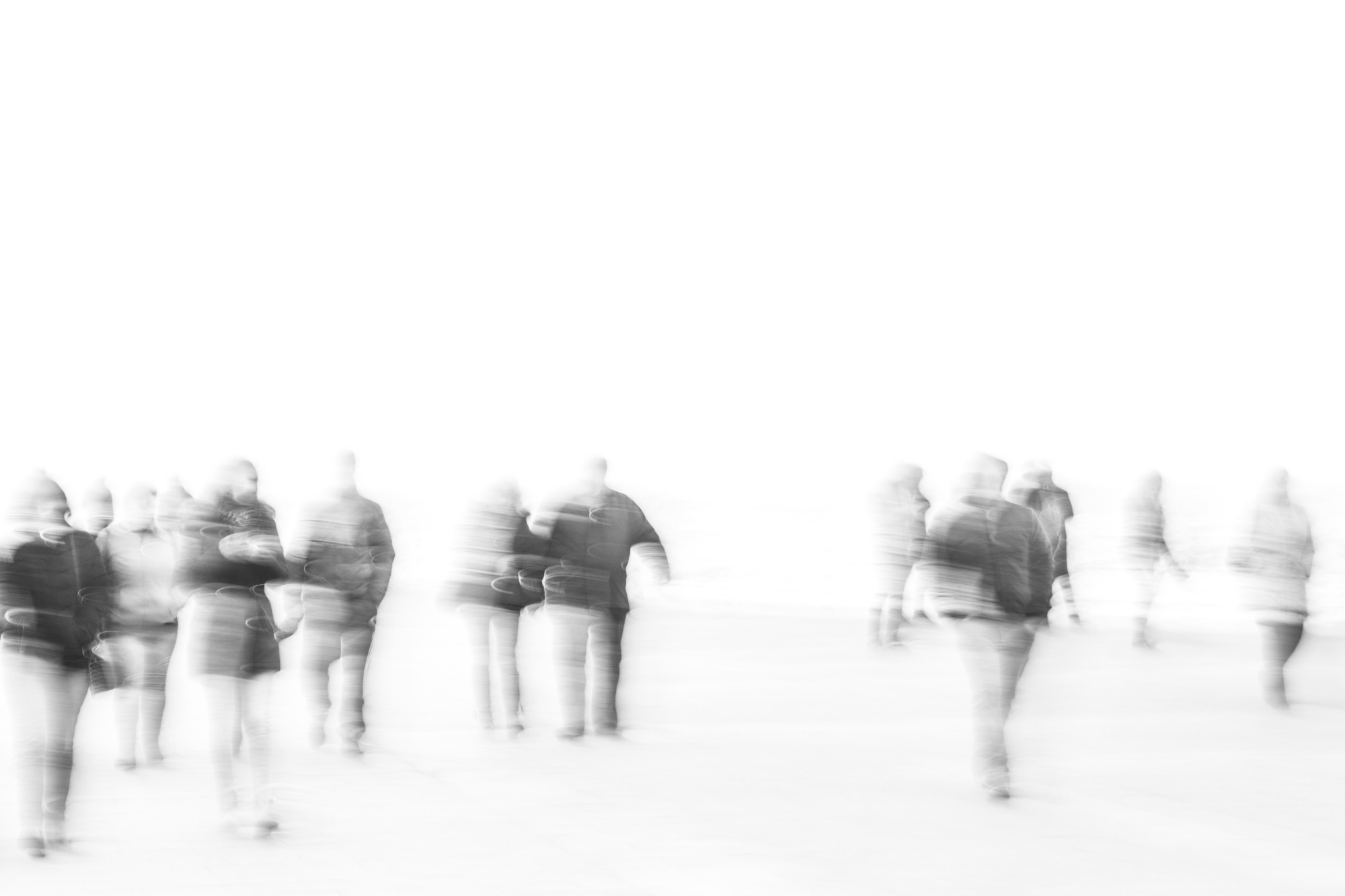
The camera, a mechanism historically used to capture and define, is forced into mechanical disobedience. Through Intentional Camera Movement, short shutter speeds, and low apertures, light does not illuminate but becomes an active agent of erasure, stripping subjects of identifying markers and dissolving the figure into a distorted form against overexposed white.
This refusal denies the gaze its required stereotypes, simultaneously blocking the processing of both cultural origin and the physical body.
Yet, a deliberate tension remains in the work’s aesthetic pleasure. The seductiveness of these forms reveals a cultural readiness to find disappearance beautiful.
Rather than confronting the observer, the work quietly asks a question: when the gaze finds comfort in the blur, has the machinery of categorization been subverted, or has the act of erasure simply been made pleasant?